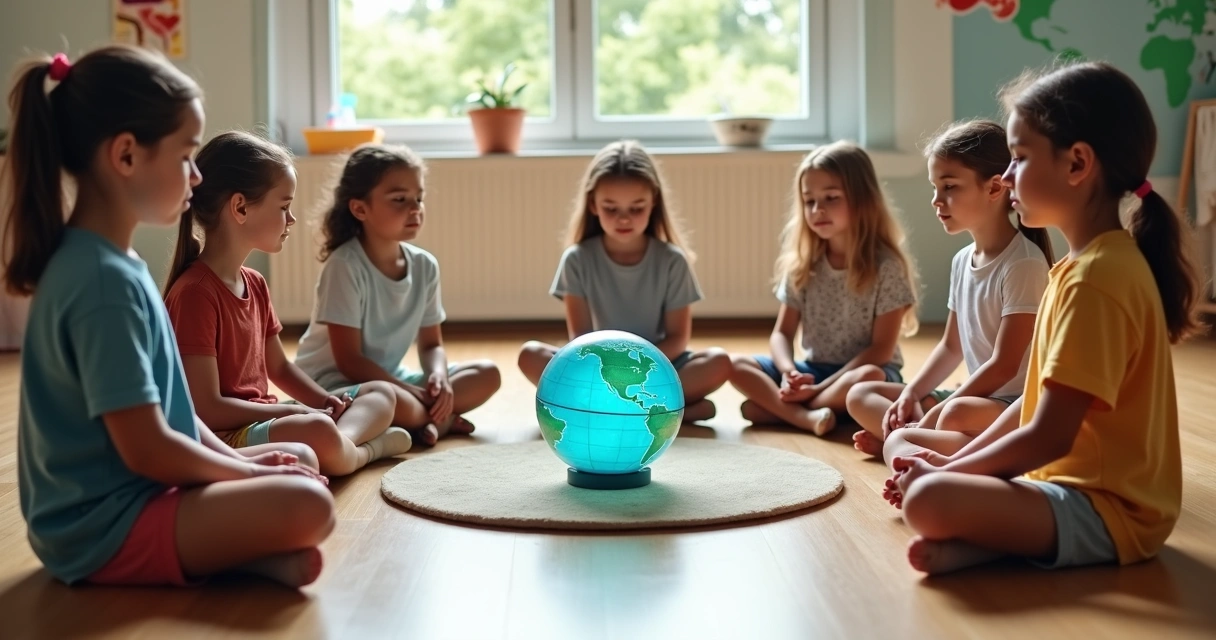
In our experience, the world children inhabit today is massive and deeply interconnected. Global citizenship is not just a concept for classrooms or textbooks—it is a living, breathing part of daily life. We see seven-year-olds connecting with friends from different continents online. We notice how local events ripple worldwide. It all reminds us of one powerful truth:
Every child’s mindset matters to our global future.
We often ask ourselves: How do we help children understand their place in the world, see others with empathy, and think beyond borders? We believe that meditation—simple, age-appropriate and practiced regularly—plants the seeds for global citizenship in childhood. Meditation helps children see themselves as part of a vast, diverse family. It empowers them to listen to their feelings, respect differences, and act with kindness.
Why nurture global citizenship in early childhood?
We see the benefits daily when children realize they are part of something larger. It goes beyond maps and flags. For us, nurturing global citizenship is about helping children:
- Become aware of their thoughts and emotions.
- Build a deep curiosity about diverse cultures and viewpoints.
- Feel compassion for others, even when they seem different.
- Understand that their choices have ripples near and far.
- Grow resilient in a fast-changing, unpredictable world.
We think these skills cannot be taught only by words. Children learn most powerfully through experience and daily practice. That is where meditation becomes a gentle but transformative tool.
Six meditation exercises to guide children toward global citizenship
Simple guided meditations can do wonders for developing mindsets that reach beyond the self. Below, we share six meditations we have seen children enjoy and grow from. They do not need to sit cross-legged or stay perfectly still. What matters is a few minutes of calm, guided reflection that helps them connect with the world inside and around them.
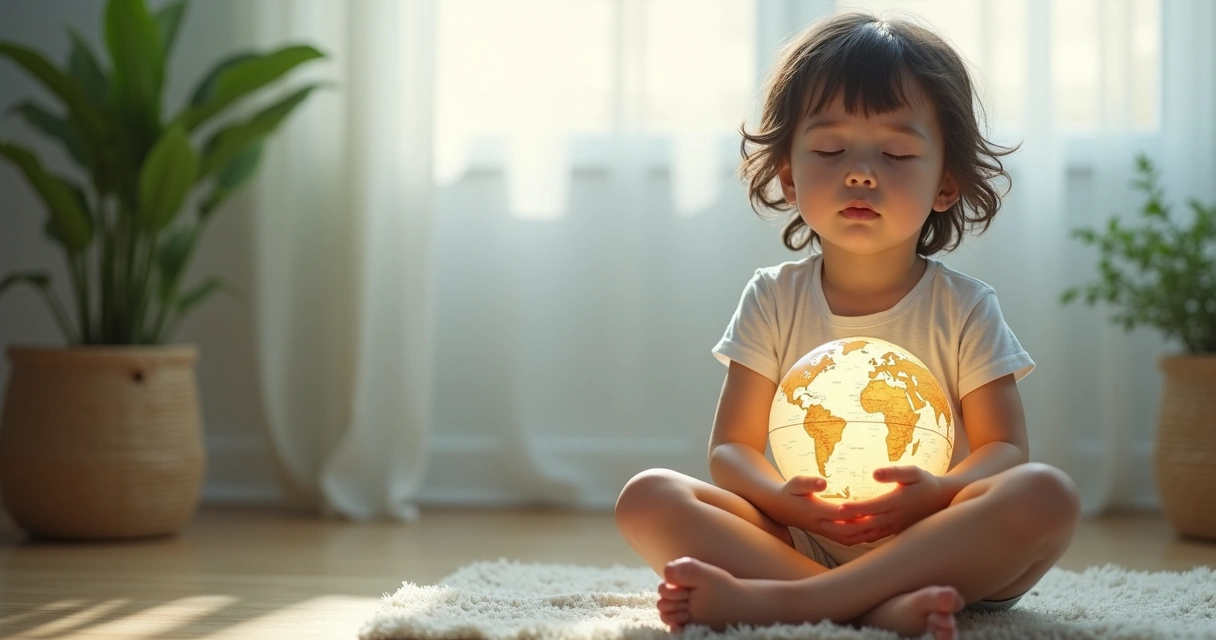
1. The breathing globe
Invite children to sit comfortably or lie down. Ask them to close their eyes and imagine a big, soft globe in front of them. With each slow breath in, they imagine the globe gently expanding. With each slow breath out, it softly shrinks. We suggest saying:
- “As we breathe in, the whole world grows a little brighter.”
- “As we breathe out, the globe rests gently in our hands.”
- “We share the air with every child, everywhere.”
Children soon realize: The same breath flows across oceans, cities, and forests.
2. The empathy walk
We like to guide children on a gentle journey in their minds. We encourage them to picture themselves walking in different places: a bustling African market, a rainforest in South America, a playground in Japan. Invite them to imagine meeting other children and thinking, “What might they be feeling right now?” We sometimes ask:
- “What games do they play?”
- “What makes them laugh?”
- “What could we learn from each other?”
This practice quietly helps expand a child’s feeling of caring beyond their immediate circle.
3. The kindness ripple
We often use this exercise after a conflict or difficult day. Ask children to picture dropping a tiny stone in a calm pond and watching waves move outward in circles. Now, invite them to think of one small kind thing they did today, or might do tomorrow. Imagine that kindness spreading outward, reaching others—neighbors, classmates, people far away.
We love to say:
Kindness travels far.
Children begin to grasp how their smallest choices touch the world.
4. The gratitude journey
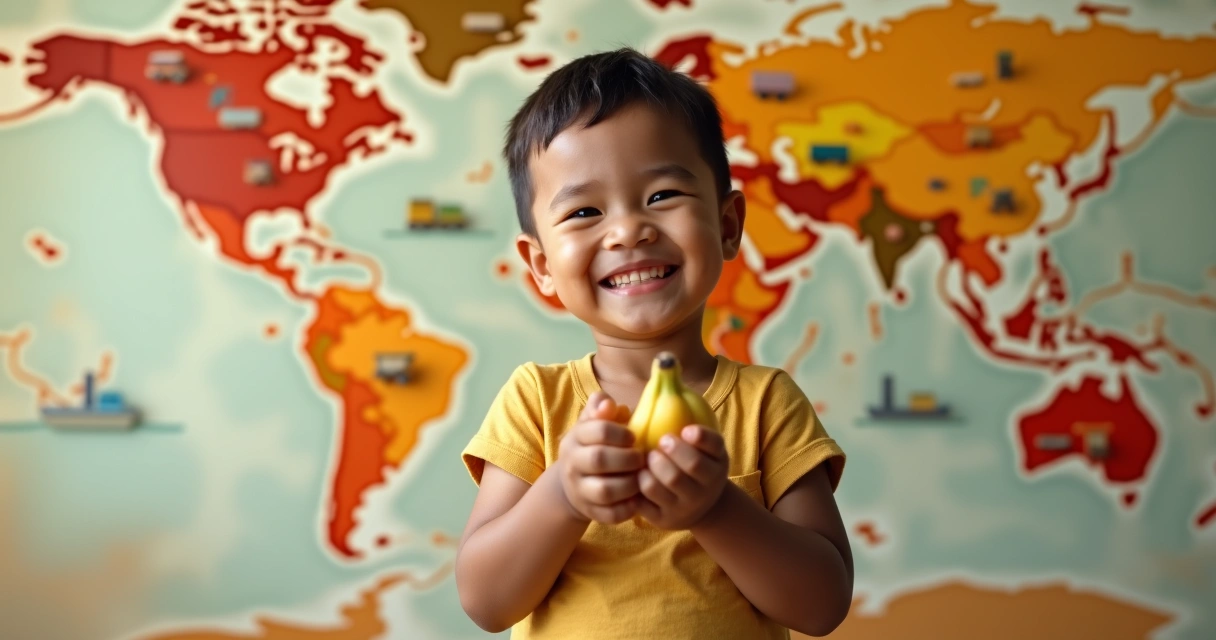
Gratitude is a shared language across the globe. We guide children to close their eyes and think of one thing they received today that might have come from another country—a banana, a story, a song. We ask them to imagine all the people, places, and steps that brought it to them.
- “Who planted the tree?”
- “Who drove the truck?”
- “Who sang the song first?”
This practice quietly connects children to a world they can thank and appreciate, even from afar.
5. The cultural curiosity pause
We encourage children to pause and ask questions whenever they see or experience something unfamiliar: a new food at lunch, a classmate celebrating a festival, an unusual word. This is less a seated meditation, more a mindful moment.
Invite them to silently ask, “I wonder what this means? What story does this tell?” The goal is to help them see difference as a doorway, not a wall.
With practice, children grow more curious and comfortable with other cultures.
6. The global bedtime blessing
Ending the day, we offer a quiet ritual. At home or in a group, invite children to think of children around the world about to fall asleep—some in big cities, some in small villages, some in refugee camps, some under peaceful skies. Encourage them to send a silent wish: “May you be safe, may you be loved, may you dream good dreams.”
We find this practice gently nurtures empathy and a sense of togetherness before sleep.
Making meditation part of daily life
The exercises above are snapshots—small but steady ways to build global citizenship, one mindful breath at a time. We have seen, in classrooms and families, how quickly children take to these practices. It is best to keep sessions brief and joyful. Children may get restless—that is normal. The key is regularity. Just a few minutes every day makes these ideas stick.
It is not about perfection; it is about planting seeds of awareness, empathy, and curiosity for everyone, everywhere.
Conclusion
As we look to the future, we believe global citizenship is not something children memorize, but something they live. Meditation makes this possible—by helping children build focus, empathy, appreciation for difference, and a heart that reaches beyond borders. Our hope is that guided, simple exercises like these can help all children recognize their place in the vast, shared world.
When we practice with them, we nurture a generation ready to care for each other, our planet, and everything in between.
Frequently asked questions
What is global citizenship for children?
Global citizenship for children means seeing oneself as part of a much larger world, where everyone is connected and has a role to play in caring for others and the planet. It includes awareness of different cultures, empathy for people everywhere, and responsibility for local and global wellbeing.
How do children benefit from meditation?
Meditation helps children manage emotions, build focus, and respond to stress more calmly. We have noticed that meditation often encourages children to think beyond themselves and become more open, compassionate, and curious about the world.
What are the six meditation exercises?
The six meditation exercises shared are: the breathing globe, the empathy walk, the kindness ripple, the gratitude journey, the cultural curiosity pause, and the global bedtime blessing. Each is designed to be easy to follow and to nurture qualities like empathy, awareness, and appreciation for diversity.
How can I teach kids meditation?
We recommend starting with very short, guided sessions—just a few minutes each day. Use stories, images, and gentle prompts that feel natural for their age. The best approach is to be patient, make it playful, and join the practice yourself.
Is meditation effective for young children?
In our experience, even very young children can benefit from meditation. With age-appropriate guidance and consistency, children as young as three or four can begin to calm themselves, notice breathing, and feel a sense of connection to others.