

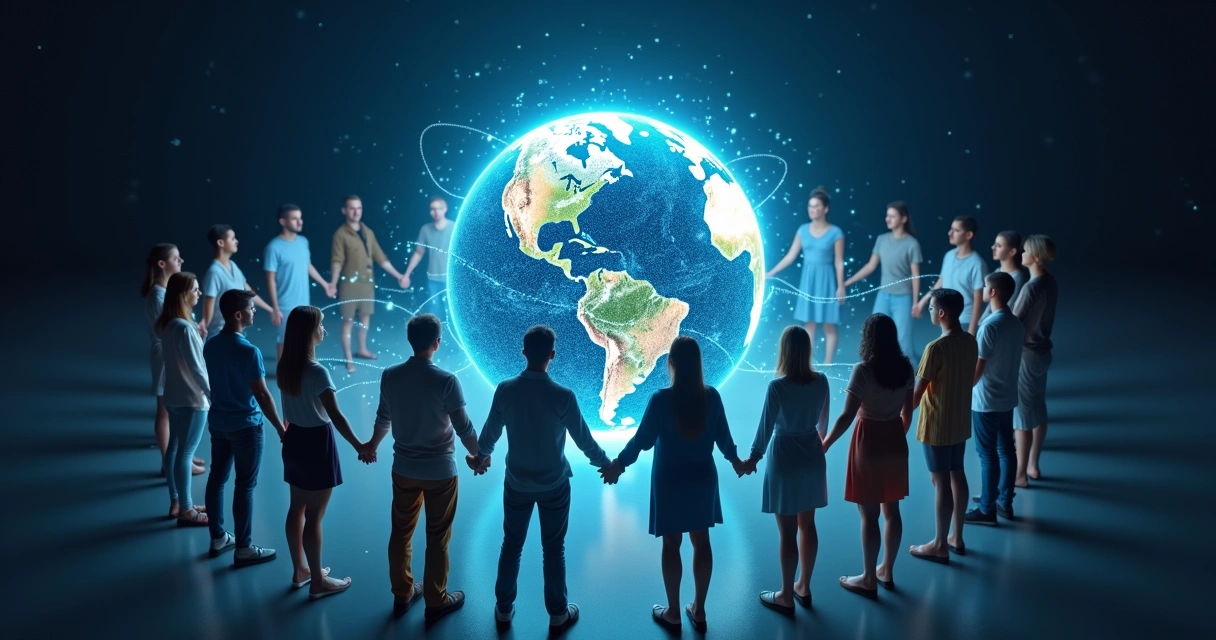
Every day, we connect. We exchange ideas, emotions, and decisions without considering how these moments shape much more than our immediate circles. If we look closer, we see something remarkable: the way we relate to others has a ripple effect that can reach far beyond personal boundaries. In this complex, interconnected world, relational intelligence matters—not just for our personal wellbeing, but for the trajectory of global change.
The interconnectedness of our world
In our experience, the world has never been so closely woven. Information crosses continents in seconds. Crises cross borders without passports. What happens in one community is felt in others, often right away. We see, hear, and feel events as collective experiences, even if we are separated by thousands of miles.
This connectedness brings challenges no one person or country can solve alone: climate change, health scares, economic shifts, and cultural misunderstandings. If we only focus on technical fixes, we miss something deeper. Conflicts often arise not because of lack of shared knowledge, but because of how we relate—or fail to relate—to one another.
How we treat each other shapes the world we share.
This is why relational intelligence stands out as a key skill for navigating this new reality.
Understanding relational intelligence
Relational intelligence is different from general intelligence. While traditional measures focus on knowledge or logic, relational intelligence is about how wisely, empathetically, and authentically we interact with others. It is the ability to understand, manage, and align our relationships for mutual growth and positive impact.
- Sensing what others feel and need
- Communicating with authenticity and respect
- Creating connections across differences
- Repairing misunderstandings and rebuilding trust
- Balancing our needs with the needs of the group
We’ve witnessed how environments—whether families or teams—flourish when people work on these abilities. This is not just about being kind or polite. Relational intelligence turns everyday conversations into opportunities for growth, learning, and shared purpose.
Relational intelligence in global action
Consider what happens when different cultures or groups meet. We see collaboration, yes, but also friction. Misunderstandings can escalate fast. Solutions often come not from more data, but from how people listen, clarify, and find common ground. Conflicts large and small are resolved—or made worse—because of the quality of human interactions.

We believe examples of relational intelligence driving global change are everywhere:
- Leaders who navigate tense negotiations by genuinely listening
- Social movements that grow through inclusive dialogue
- Communities recovering from crises by building trust between diverse groups
- Teams creating breakthrough solutions by welcoming many perspectives
The pattern is clear. Whenever transformation occurs—whether in policy, science, or society—it involves people communicating skillfully and supporting one another. These are not just “soft skills” to be tacked on. They are the backbone of real, lasting change.
How does relational intelligence shape collective outcomes?
When we relate well, we create fertile ground for cooperation. We reduce friction, inspire confidence, and increase resilience. Trust grows. Differences don’t have to mean division.
On the other hand, poor relational habits lead to suspicion, closed minds, and missed chances. Global issues linger, not just because they are complex, but because we struggle to navigate differences with respect and clarity.
The way we connect defines the systems we build together. This is true on every level—from families and schools to governments and international alliances.
What happens when relational intelligence is lacking?
Without relational intelligence, misunderstandings multiply. We see this in communities fractured by prejudice, workplaces burdened by mistrust, and negotiations that break down over small differences. When people feel unheard or judged, they retreat. Innovation drops, and solutions stall.
Sometimes, the damage goes deeper. Communities fracture, peace efforts unravel, and social progress slows. These effects remind us that relational intelligence is a foundation for unity and progress, not a luxury.
When we don’t know how to connect, even the best plans can fail.
Building relational intelligence: Skills that matter
In our observations, relational intelligence can be learned and refined at any age. We see it as a lifelong journey of becoming more conscious, intentional, and compassionate in how we relate. Key skills include:
- Active listening: Focusing attention, withholding judgment, and reflecting back understanding.
- Empathy: Feeling with others, not just for them, and showing genuine concern.
- Self-awareness: Recognizing how our actions and emotions impact those around us.
- Conflict resolution: Addressing disagreements without blame, and seeking balanced solutions.
- Cultural sensitivity: Approaching differences with curiosity, humility, and openness.
Practice may look simple: pausing in conversation, clarifying what we hear, or asking thoughtful questions. But over time, these actions change group dynamics and outcomes. We encourage integrating these habits into daily life, because even small shifts ripple outwards.
Relational intelligence and global responsibility
With the current challenges spanning borders, each person’s relational actions add to a collective atmosphere. When enough people work on these skills, it influences how communities respond in times of stress and opportunity.
Every relationship is a chance to build a more caring world.
Imagine decisions made not just on expertise, but with real understanding of those affected. Envision negotiations shaped by respect, or policies crafted in dialogue with many voices. This is the promise of relational intelligence on a global scale.

The power of conscious connection
In our experience, the skills we use in daily conversations have the ability to influence wider systems. We shape global outcomes one relationship at a time—through small choices, intentional listening, honest feedback, and gestures of understanding. Relational intelligence transforms not only our own lives but the direction of our shared future.
Change starts with how we connect today.
Conclusion
Relational intelligence gives us the means to turn connection into progress. In a world where every action matters and outcomes are shared, it is not optional. The quality of our relationships sets the tone for how we face global challenges, build understanding, and create common ground. We are convinced that learning to grow together—by listening, empathizing, and working through differences—will guide our path to a more peaceful, stable, and human world.
Frequently asked questions
What is relational intelligence?
Relational intelligence is the skill of understanding, managing, and nurturing relationships with emotional awareness, empathy, and purpose. It helps us relate effectively by combining self-awareness with social skills, enabling us to connect across differences and support meaningful outcomes.
Why is relational intelligence important?
Relational intelligence is important because it shapes our ability to communicate, collaborate, and solve problems together. With this skill, misunderstandings are resolved more easily, trust is built, and cooperation becomes possible even among people with different backgrounds or views.
How does relational intelligence drive global change?
Relational intelligence drives global change by creating conditions for collective understanding, practical solutions, and lasting peace. When enough people prioritize empathy, clear communication, and conscious interaction, their ripple effect fosters trust and shared action on a global scale.
How can I improve relational intelligence skills?
You can improve relational intelligence by practicing active listening, developing empathy, owning your emotions, welcoming feedback, and building skills in conflict resolution. Choosing to learn from each interaction helps you build trust and adapt to different perspectives.
What are examples of relational intelligence in action?
Examples include team members sharing honest feedback respectfully, leaders listening deeply during disagreements, and communities rebuilding trust after conflict. Genuine apology, open dialogue, and seeking win-win outcomes all show relational intelligence in everyday life.