

There are days when we step outside, feel the air on the skin, and sense that the world is not separate from us. Then routine returns. Screens pull our gaze. Noise fills the body. We forget that the nervous system is always in contact with place, weather, sound, and life around us.
We think planetary connection begins in the body. Not as an abstract idea, but as felt contact. When our breath slows, when our feet notice the ground, when our muscles release a little, we stop relating to Earth as a backdrop and begin relating to it as a living field we belong to.
Somatic practices help us feel interdependence, not just think about it.
In our experience, this felt shift changes how we move through daily life. We waste less attention. We react less fast. We notice more. That may sound small, yet many large choices begin in these quiet inner changes.
Why the body matters
The body is our first place of contact. Before we form opinions, we sense temperature, pressure, rhythm, tension, and space. A person can read about climate, community, and care for years and still feel cut off. Then one silent walk at dawn can say more than many pages.
Connection is first felt.
Somatic work invites us to listen to that direct layer of experience. The seven practices below are simple. None asks for perfection. We can begin with a few minutes and let the body teach us what presence means.
Seven practices for grounded planetary awareness
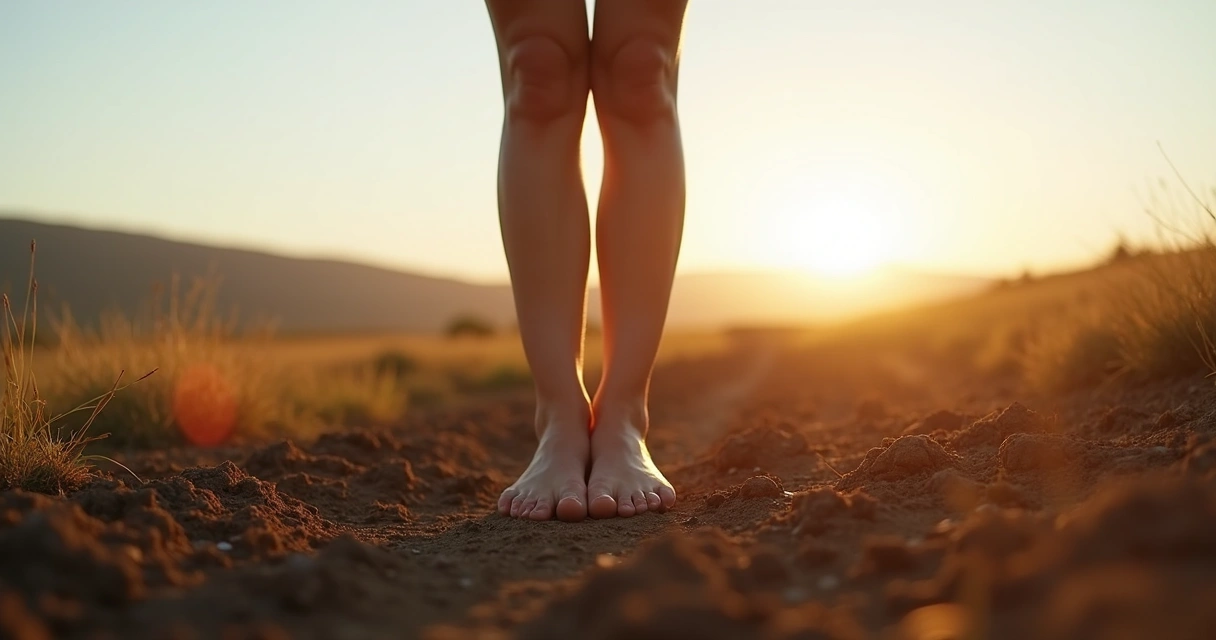
1. Ground sensing through the feet
Stand still for one or two minutes. Keep the knees soft. Let the weight drop into both feet. Notice heel, arch, toes, and the tiny shifts that keep balance alive.
This practice seems basic, yet it changes perception fast. We often live from the neck up. When we feel the feet, attention spreads through the whole body. We become less trapped in mental speed.
The feet teach stability by placing us in real contact with the ground beneath us.
We like to do this on soil, stone, or wood when possible. Indoors also works. The point is not the setting alone. It is the act of sensing support.
2. Breath with the horizon
Go outside, or stand by a window with a long view. Let the eyes rest on the horizon or the farthest point available. Inhale gently for four counts. Exhale for six. Repeat for several rounds without strain.
Looking far relaxes the visual system. Lengthening the exhale signals safety to the body. Together, these two actions widen inner space. We stop shrinking around our tasks and begin to feel part of a larger world.
One evening, after a day of tight deadlines, we tried this for five minutes under a pale sky. The body did not become perfect. It became honest. The jaw softened. The chest opened. That was enough.
3. Walking in relational silence
Choose a short route and walk without headphones, calls, or messages. Let the arms swing naturally. Feel each step complete before the next begins. Notice sounds without naming each one too quickly.
This is not a fitness walk. It is a sensory walk. We are not trying to get somewhere fast. We are practicing relationship.
A helpful sequence is:
- Notice the contact of each step.
- Listen for the farthest sound.
- Listen for the nearest sound.
- Feel the air on the face and hands.
After a few minutes, many people report the same thing. The world feels less flat. More alive. More mutual.
4. Hand-to-heart and hand-to-earth pause
Kneel, sit, or stand near a natural surface. Place one hand on the chest and the other on the ground, a tree trunk, or a stone wall. Stay for a few breaths.
This gentle cross-reference matters. One hand senses inner rhythm. The other senses outer texture and temperature. The body receives both at once.
When we feel our heartbeat and the world together, separation starts to soften.
This can be moving during stress. Not dramatic. Just clear. We remember that our private state is always happening inside a larger field of life.
5. Orienting with sound and direction
Stand or sit comfortably and turn the head slowly from left to right. Let the eyes follow. Pause where the body feels most at ease. Then listen in four directions: front, back, left, and right.
This practice comes in handy when we feel scattered. The nervous system likes orientation. It settles when it knows where it is.
We can deepen the practice by noticing:
- Wind, birds, traffic, or distant voices
- Changes in light and shade
- The temperature on different sides of the body
Direction gives shape to space. Space gives calm to the body. Calm gives room for care.
6. Resting against a living support
Sit with your back against a tree, or if that is not possible, rest beside a plant-filled area, garden wall, or natural slope. Let the spine be supported. Do not force posture. Let support be support.
Many of us are used to holding ourselves up all day, physically and emotionally. Leaning changes that pattern. The body learns that contact can include receiving, not only doing.
Stay long enough to notice the second layer of sensation. At first there may be restlessness. Then small details appear: bark texture, scent in the air, pressure in the shoulders, slower thoughts. This is where the practice begins to deepen.

7. Body scan with ecological gratitude
Lie down or sit comfortably. Move attention slowly through the body from feet to head. As you notice each area, name one form of support linked to life on Earth. For example, feet and soil, lungs and trees, blood and water, skin and sunlight.
This is a quiet way to join body awareness with gratitude. Not forced gratitude. Real gratitude. The kind that comes when we notice that our body is in exchange with the world at every moment.
We think this final practice helps turn awareness into ethics. When connection is felt in the body, care becomes more natural. We do not act from guilt alone. We act from belonging.
How to make these practices part of daily life
You do not need a long ritual. Five minutes can shift the tone of a whole day. We suggest choosing one practice for the morning and one for the evening for a week. Keep it simple enough that the body says yes.
If one day feels dull, that is normal. Somatic practice is not performance. It is relationship built through repetition. Quietly. Steadily.
Conclusion
Planetary connection is not only a belief. It is a bodily capacity. The more we sense support, space, rhythm, and relationship, the more our actions can come from a mature inner ground. These seven somatic practices help us train that ground with humility and direct experience.
We do not need to escape the world to feel close to it. We need to come back to the body, and from there, back to the living Earth.
Frequently asked questions
What are somatic practices for planetary connection?
Somatic practices for planetary connection are body-based exercises that help us feel our relationship with the natural world. They use breath, movement, touch, attention, and sensory awareness to build a direct sense of belonging with the Earth.
How can I start somatic planetary practices?
We can start with one simple habit, such as feeling the feet on the ground for two minutes or taking a quiet sensory walk. It helps to begin small, stay consistent, and focus on real sensations instead of trying to create a special mood.
Are somatic practices effective for nature connection?
Yes, many people find them effective because they shift connection from a mental idea to a felt experience. When the body slows down and pays attention, nature often feels closer, more present, and more personal.
Which somatic practice is easiest to learn?
Ground sensing through the feet is often the easiest. We only need to stand still, soften the knees, and notice how the ground supports body weight. It is simple, direct, and easy to repeat each day.
Do I need any equipment for somatic practices?
No, most somatic practices need no equipment at all. A quiet moment, a bit of space, and willingness to notice the body are usually enough. Outdoor settings can help, but they are not required.