
We do not resist interconnectedness only with loud opinions or open rejection. Many times, we resist it in quiet ways, through habits that feel normal, rational, and even harmless. That is why this subject asks for honesty. If we want a more conscious human future, we have to notice where we still pull away from the shared field of life.
Planetary interconnectedness means our inner life, choices, and systems are linked across borders.
We have seen this truth become clearer in daily life. A purchase in one place affects labor in another. A rumor in one city shapes fear in another. A private emotional wound can spill into public behavior. Nothing stays neatly contained anymore. Still, many of us act as if our lives are separate islands.
That resistance is not always obvious. It can hide inside good manners, personal goals, or the wish to feel safe. Below, we will look at seven hidden signs that show when we are pulling away from a wider human bond.
1. We treat global problems as someone else’s issue
One hidden sign appears when we speak of climate stress, war, migration, hunger, or social tension as distant events with no link to our own lives. This is a psychological defense. Distance feels safer.
We may say, “That is sad,” and move on. We may think compassion is enough. But when concern never becomes reflection, our awareness stays shallow.
Distance can be emotional, not only geographic.
In our experience, this habit often starts with overload. There is simply too much news, too much pain, too much noise. So we narrow our field. Yet when we do this too often, we train ourselves to avoid shared reality.
2. We prefer comfort over contact with difference
Another sign is subtle avoidance of people, ideas, or cultures that challenge our mental habits. We may not call it rejection. We may call it “personal preference.” But if we only feel safe around what is familiar, our consciousness remains closed.
A 2024 study indexed on PubMed about resistance to diversity and inclusion shows that opposition to inclusion efforts is often tied to hidden bias and systemic patterns. This matters because resistance is not always dramatic. Sometimes it looks polite. Sometimes it sounds educated. Still, it blocks human connection.
When difference feels like a threat, we often protect identity instead of expanding awareness.
We have all felt this at some point. A new viewpoint enters the room, and the body tightens before the mind forms words. That small contraction says a lot.

3. We reduce people to categories
It is easier to handle the world when we sort people into neat labels. Rich and poor. Locals and foreigners. Educated and uneducated. Safe and unsafe. The mind likes speed. It likes boxes.
But life does not fit into them for long. When we reduce people to categories, we stop meeting them as living beings. We stop sensing complexity, history, grief, dignity, and context.
A 2018 study indexed on PubMed on resistance to change and cultural inclusion points to how exclusion and marginalization limit access to shared cultural knowledge and social pathways. This means our labels do more than simplify. They can isolate.
We once heard someone say, very calmly, “I do not dislike anyone. I just know who belongs where.” That sentence was quiet. It was also revealing.
4. We believe our success is fully self-made
This sign is common in high-pressure cultures. We praise independence so much that we forget support systems, unseen labor, inherited conditions, and collective structures. Soon, we begin to believe we rose alone.
But none of us stands outside networks. Our food, language, transport, education, health, and even self-image are shaped by many hands. Some we know. Most we do not.
A research report from the University of California, Riverside describes how global production shifts have weakened worker solidarity and union membership across wealthy democracies over decades. That pattern reminds us that individual outcomes are deeply tied to large systems, even when personal stories make them look private.
The myth of total self-sufficiency hides the web of relationships that sustains every life.
When we cling to that myth, empathy gets thinner. We judge faster. We thank less.
5. We react to inequality with blame, not reflection
When people feel shut out of opportunity, pain often turns into anger. If we answer that pain only with blame, we miss the deeper wound. Resentment does not rise in empty space.
A research summary from the Becker Friedman Institute suggests that rising inequality can fuel resentment and backlash against global integration when people feel benefits are shared unfairly. This shows that resistance to interconnectedness is not always ideological. Sometimes it grows from hurt, exclusion, and distrust.
We think this is one of the hardest signs to admit. It is easy to call people uninformed. It is harder to ask what conditions made them feel abandoned in the first place.
6. We confuse constant information with real awareness
We can read updates all day and still remain disconnected. Information alone does not create conscience. In fact, too much fragmented input can numb us.
This sign shows up when we know many facts but have very little felt relationship with what those facts mean. We scroll through suffering. We skim through conflict. We collect headlines, then carry on unchanged.
- We know more names, but feel less human closeness.
- We see more crises, but build fewer inner responses.
- We speak more often, but listen less deeply.
That split matters. Planetary awareness is not a pile of data. It is the ability to stay present to shared reality without shutting down.
7. We avoid inner work because outer systems feel bigger
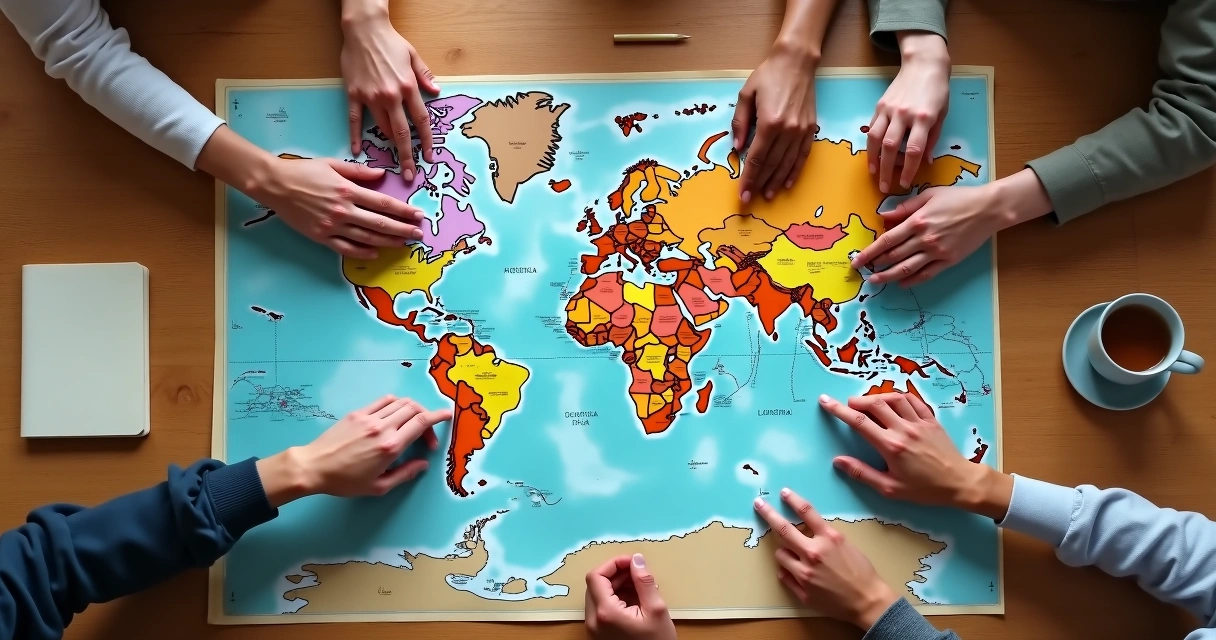
This may be the most hidden sign of all. We look at the size of global crises and think, “My inner state does not matter.” So we postpone self-examination. We leave our fear, denial, impatience, and numbness untouched.
Yet systems are made of people. Policies are shaped by minds. Cultures are carried through repeated emotional patterns.
A 2007 study indexed on PubMed on diversity, development, and social stability found that different forms of diversity interact in their effects on social stability. We read this as a reminder that collective life depends not only on structures but also on how people relate across difference. Inner maturity changes social outcomes more than many of us admit.
We have seen small inner shifts change whole conversations. One person pauses instead of reacts. One person listens instead of labels. One person chooses contact over fear. That is not small. It spreads.
Conclusion
Resisting planetary interconnectedness does not always look harsh or hostile. Often, it looks ordinary. It appears in the way we distance pain, avoid difference, flatten people into labels, glorify self-sufficiency, judge social anger, consume endless information, or neglect our own inner growth.
When we see these signs clearly, resistance begins to loosen.
We do not need perfection. We need sincerity. A more connected world is built each time we widen our view, soften our defenses, and act from the truth that no life stands alone. That work starts close to home, inside our own attention.
Frequently asked questions
What is planetary interconnectedness?
Planetary interconnectedness is the recognition that human lives, emotions, systems, and choices affect one another across the world. It includes social, economic, cultural, emotional, and ecological links. It is not only about global events. It is also about how our daily actions enter a shared human field.
How can I tell if I’m resisting it?
We can tell by noticing our patterns. If we dismiss distant suffering, avoid people who are different, reduce others to labels, or think our choices have no wider effect, resistance may be present. It often shows up as emotional withdrawal, not open denial.
Why is planetary interconnectedness important?
It matters because our world already functions as an interdependent system. Social tension, inequality, environmental strain, labor shifts, and public emotion cross borders quickly. When we understand this, we respond with more maturity, fairness, and care.
What are the hidden signs to watch for?
The main signs include treating global pain as distant, preferring only familiar perspectives, reducing people to categories, believing success is fully individual, blaming people for inequality without looking at causes, mistaking information for awareness, and avoiding inner work because the world feels too large.
How can I embrace planetary interconnectedness?
We can begin with simple but honest steps. Listen across difference. Reflect on how our comfort is linked to wider systems. Stay present to world events without becoming numb. Question labels. Practice inner awareness. One grounded shift in perception can change how we relate to the whole.