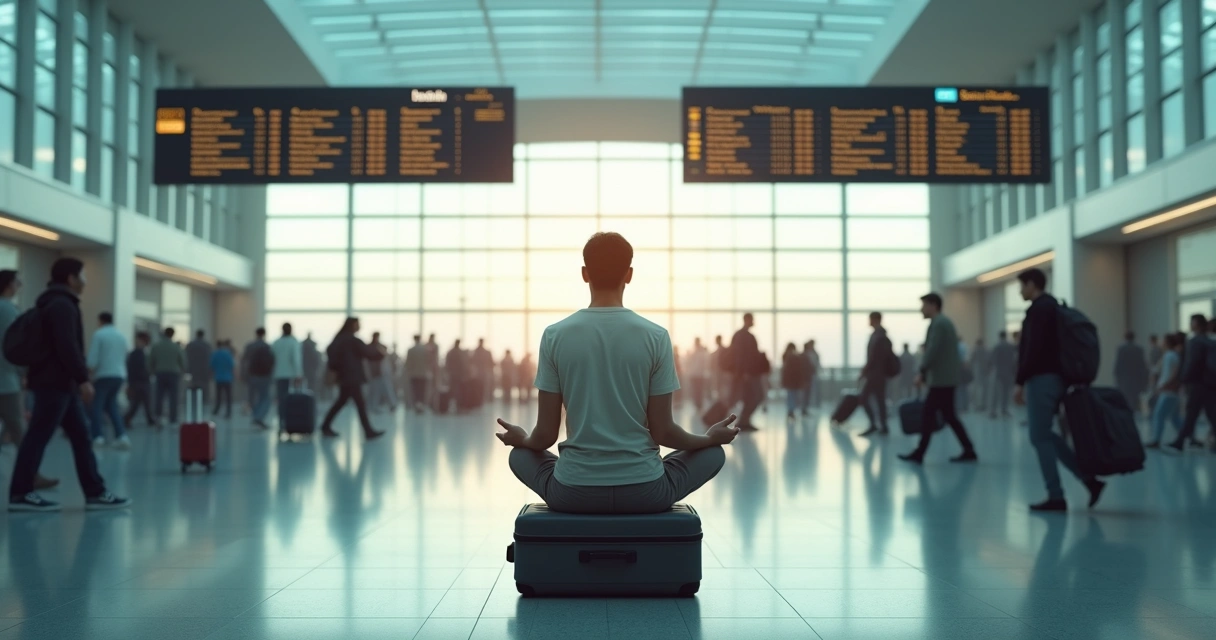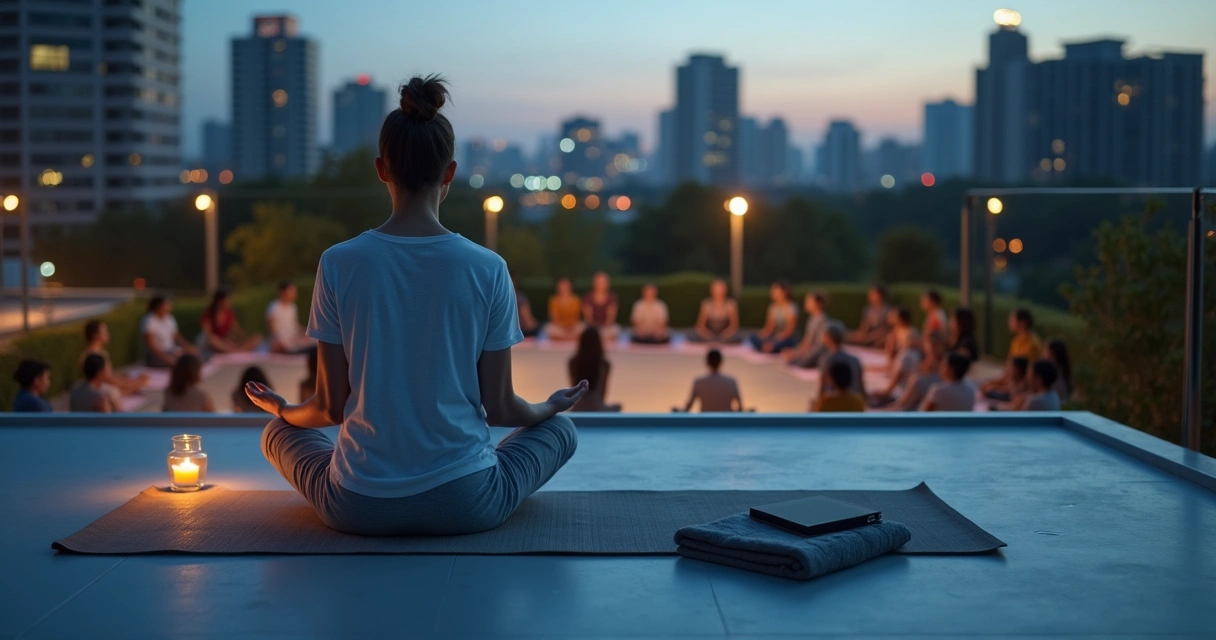
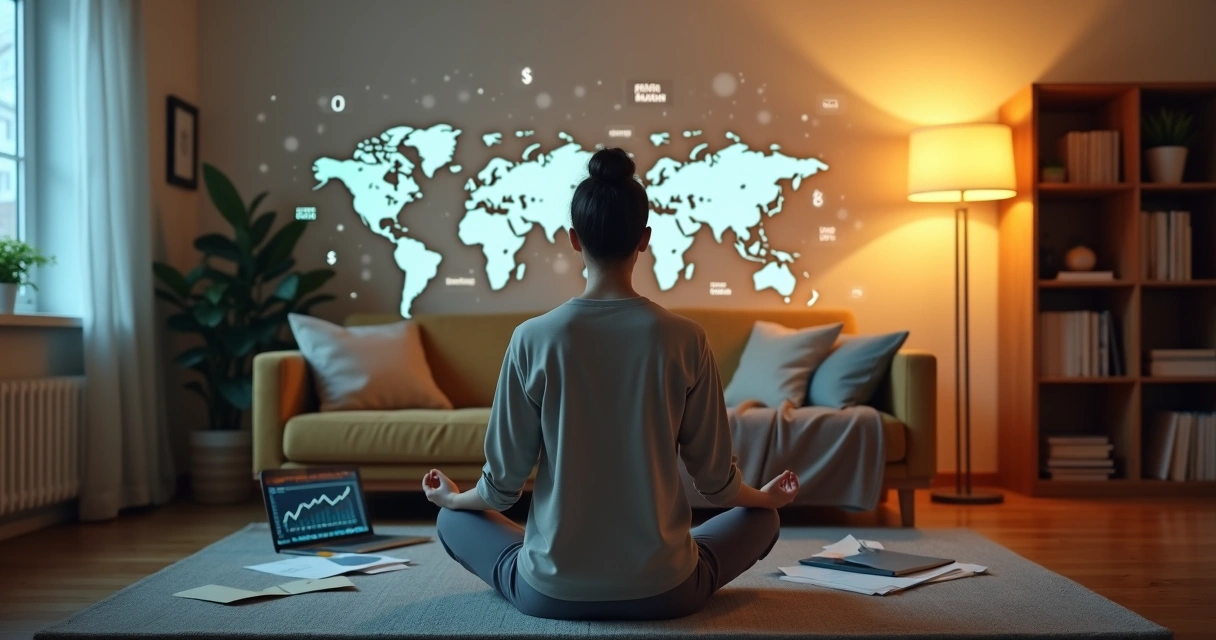
When money feels less stable, the mind rarely stays calm on its own. We check prices more often. We think ahead too far. We wake up tired, even after sleep. In our experience, global economic uncertainty does not stay in news headlines. It enters the body as tension, shortened breath, and constant alertness.
Meditation during uncertain times is not a way to avoid reality, but a way to meet reality without panic.
That shift matters. When we sit in silence for even a few minutes, we begin to notice what fear is doing inside us. We see the racing thought. We feel the tight jaw. We catch the urge to predict every possible loss. This is where meditation starts to help. Not by fixing markets, but by helping us return to steadiness.
Why uncertainty hits the nervous system
Financial pressure often feels personal, even when it is global. A rise in costs, job insecurity, or repeated negative headlines can create a sense that the ground is moving. We may still be safe in the present moment, but the body reacts as if danger is already here.
That reaction is common. An OECD report on mental ill-health and macroeconomic shocks estimates that just over 20% of people in OECD and EU countries experienced a mental disorder in 2023, with anxiety and depression standing out. The report also links shocks such as inflation and rising unemployment with a heavier mental health burden across populations.
We do not need to wait until stress becomes a crisis. Meditation gives us a simple way to interrupt the cycle earlier.
Calm is a practice.
What meditation can do right now
When the future feels unstable, the mind wants control. It starts scanning, planning, and replaying fears. Meditation helps by changing our relationship with those thoughts. Instead of following every thought, we learn to witness it and let it pass.
A short daily practice can lower mental noise and help us respond with more clarity.
We have seen that people often expect meditation to create instant peace. Sometimes it does not. Sometimes the first result is simply awareness. We sit down and notice how distressed we really are. That can be uncomfortable, but it is honest. And honesty is a better starting point than numbness.
Meditation may help us:
Slow down stress breathing and soften physical tension.
Notice catastrophic thinking before it takes over the day.
Create a pause before reactive decisions.
Sleep with a quieter mind at night.
These changes may seem small. They are not. Small inner changes often shape how we speak, spend, work, and care for others.
How to meditate when your mind feels crowded
Many people say the same thing: “I cannot meditate because I cannot stop thinking.” We understand that feeling. During unstable times, thought activity often increases. But meditation is not the art of having no thoughts. It is the art of not getting pulled by every thought.
We suggest starting with a very plain method:
Sit in a chair with both feet on the floor.
Set a timer for five minutes.
Rest one hand on the chest and one on the abdomen.
Breathe in through the nose and out slowly.
When thoughts come, name them softly: “planning,” “fear,” “memory,” or “worry.”
Return attention to the breath without judging yourself.
This method works because it is direct. It gives the mind one simple task and gives the body a signal of safety. The hand placement also helps us stay present when emotions rise.
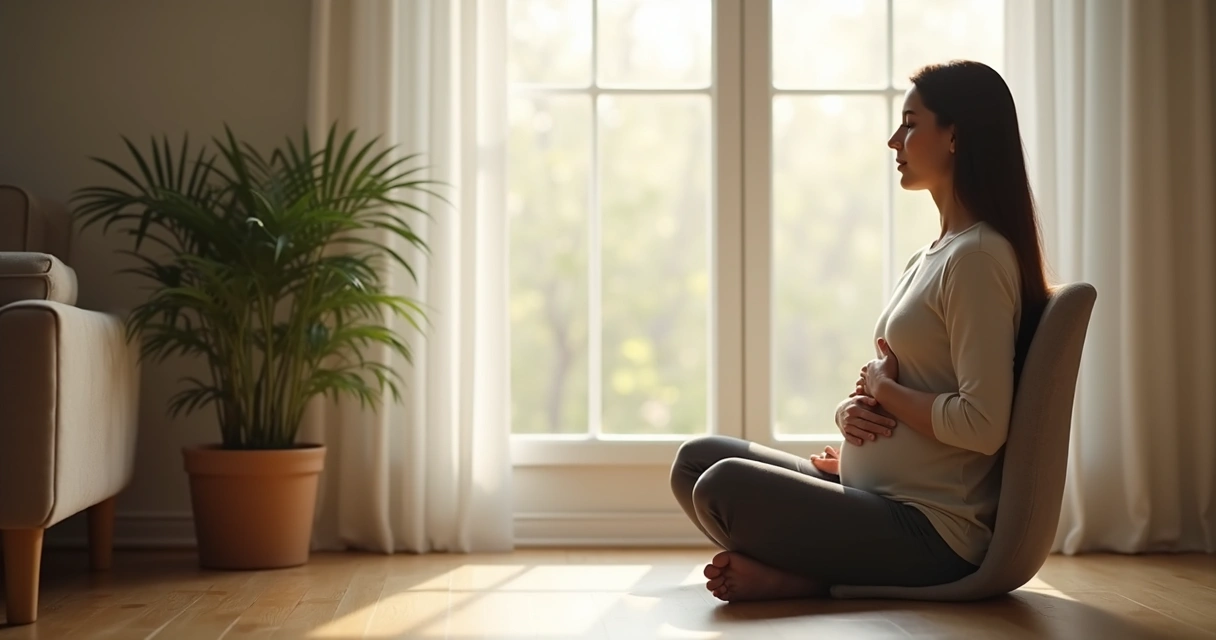
Meditation styles that fit financial stress
Not every practice feels right in every season. When anxiety is high, we usually need structure more than abstraction. In our view, these three styles tend to work well during economic uncertainty.
First, breath meditation. This is useful when stress is showing up as agitation, shallow breathing, or racing thoughts. Counting the exhale can help. We may inhale naturally and count the exhale from one to five.
Second, body scan meditation. This is helpful when worry becomes physical. We move attention slowly from the forehead to the feet and notice tension without trying to force release.
Third, grounding meditation. This supports us when news and numbers create mental overload. We name what is real in the room: five things we see, four things we feel, three things we hear. It is simple. It works.
The best meditation technique is the one we can return to on difficult days.
Building a routine that feels human
A meditation habit does not need to look perfect. In fact, trying to make it perfect often makes people quit. We think it is better to build a routine that matches real life.
One person we once spoke with kept waiting for a full half hour of silence each morning. It rarely came. Bills, messages, family duties, and fatigue interrupted the plan. When that person changed the goal to seven minutes before breakfast, the practice finally stayed.
We can make the same adjustment. A routine becomes easier when we:
Choose the same time each day, such as after waking up or before sleep.
Use the same place, even if it is only one corner of a room.
Keep the session short enough to feel possible.
Track consistency by days practiced, not by how calm we felt.
That last point matters. Some days meditation feels steady. Other days it feels messy. Both days count.
What to do when fear returns after meditation
It often will. One session does not remove all fear, and we should not expect it to. The aim is not to become untouched by life. The aim is to recover balance faster and with less inner damage.
When fear returns, we can use short resets during the day. Three slow breaths before opening the banking app. A one minute pause after reading difficult headlines. A hand on the heart before a hard conversation about money.
Pause before reaction.
These small pauses help protect our judgment. During uncertainty, many poor choices begin in a rushed emotional state. Meditation gives us space between feeling and action.
Conclusion
Global economic uncertainty can make the future feel loud. Meditation helps us lower that volume inside. It does not erase concern, and it does not replace practical financial action. What it can do is help us breathe, observe, and choose with more steadiness.
We believe this is one of the quiet strengths of meditation. In unstable times, it brings us back to what is here now, to the body, to the breath, and to the next clear step. That is not a small thing. It is how inner stability begins.
Frequently asked questions
What is meditation during economic uncertainty?
Meditation during economic uncertainty is a practice of calming the mind and body while facing financial stress, unstable news, or fear about the future. It usually includes quiet attention to the breath, the body, or the present moment so we can respond with more balance.
How can meditation help with financial stress?
Meditation can help with financial stress by reducing mental overload, slowing the stress response, and creating a pause before impulsive reactions. It helps us notice fear without letting fear make every decision.
What are the best meditation techniques now?
For many people, the best techniques right now are breath meditation, body scan meditation, and grounding practices. These methods are simple, direct, and easier to keep during stressful periods because they focus attention on clear physical anchors.
Is it worth it to meditate daily?
Yes, daily meditation is often worth it because regular practice builds familiarity with calm and awareness. Even five to ten minutes a day can help us recover from stress more quickly and stay more centered when uncertainty rises.
Where to find guided meditation resources?
We can find guided meditation resources in mindfulness books, audio libraries, wellness platforms, local meditation groups, therapists’ recommendations, and public health or educational materials. It is usually best to choose a calm, clear guide whose style feels steady and easy to follow.