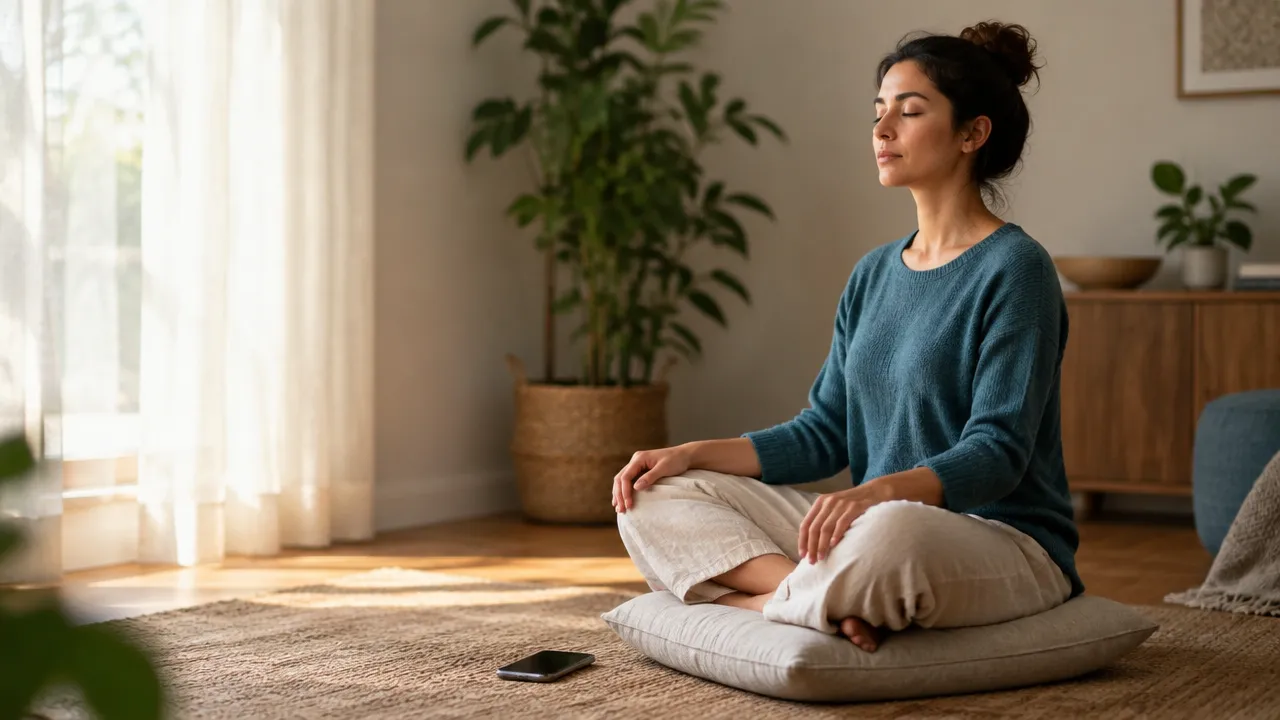

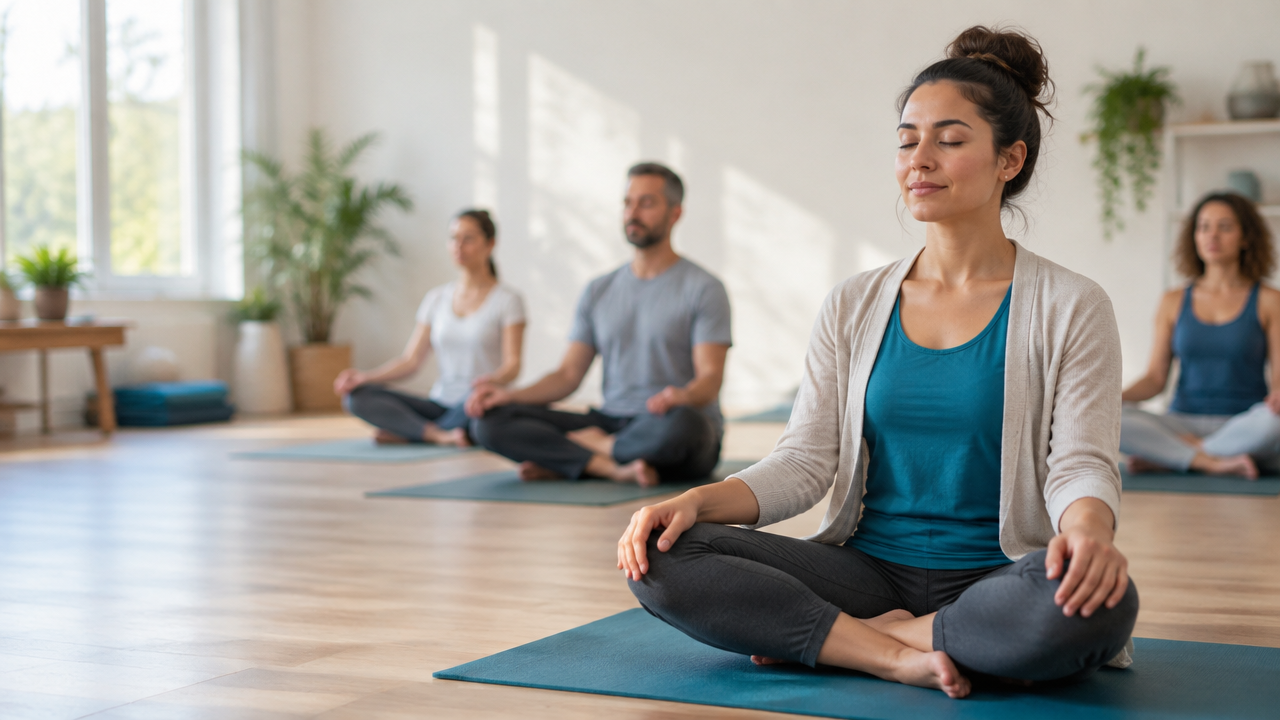
Mindfulness-based stress reduction (MBSR) is a structured course that teaches meditation, body awareness, gentle movement, and ways to work with stress in daily life. Expect regular guided practice, time to reflect with a group, and home exercises between sessions. The aim is not to empty your mind or eliminate stress, but to notice what is happening and respond with greater awareness.
Key points to know before you begin
- A typical MBSR course runs for eight weeks, though schedules and formats vary by provider.
- Core practices often include a body scan, seated meditation, gentle movement, and informal mindfulness during everyday activities.
- Regular home practice is part of the learning, so check the expected time commitment before enrolling.
- MBSR can support stress management, but it is not a guaranteed treatment or a replacement for professional care.
- You can ask about adaptations if sitting, lying down, or moving is uncomfortable.
What happens during an eight-week course?
MBSR is a learning program, not simply a series of relaxation sessions. Many standard courses meet weekly, combine guided exercises with group discussion, and include a longer practice day; exact class length and retreat arrangements depend on the provider.
Sessions usually build gradually. Early classes introduce attention to the body and breath, while later sessions explore how to bring awareness into difficult moments, communication, and routine tasks. Instructors may invite participants to describe what they noticed, but you should not have to share personal details you would rather keep private.
Between classes, participants are typically asked to practice at home. Before signing up, ask how much time is recommended, whether audio guidance is supplied, and what happens if you miss a session. A good fit depends partly on whether the course’s structure works with your life.
The NCCIH overview of mindfulness describes MBSR as a program that combines meditation with discussion and strategies for applying skills to stressful experiences. That practical application is central: the class is a place to learn, while daily situations are where you experiment with the skills.
Which practices will you learn?
Expect to practice directing attention toward immediate experience, then returning to it when the mind wanders. Mindfulness does not require suppressing thoughts or forcing yourself to feel calm. The work is noticing thoughts, emotions, and physical sensations with less automatic judgment.
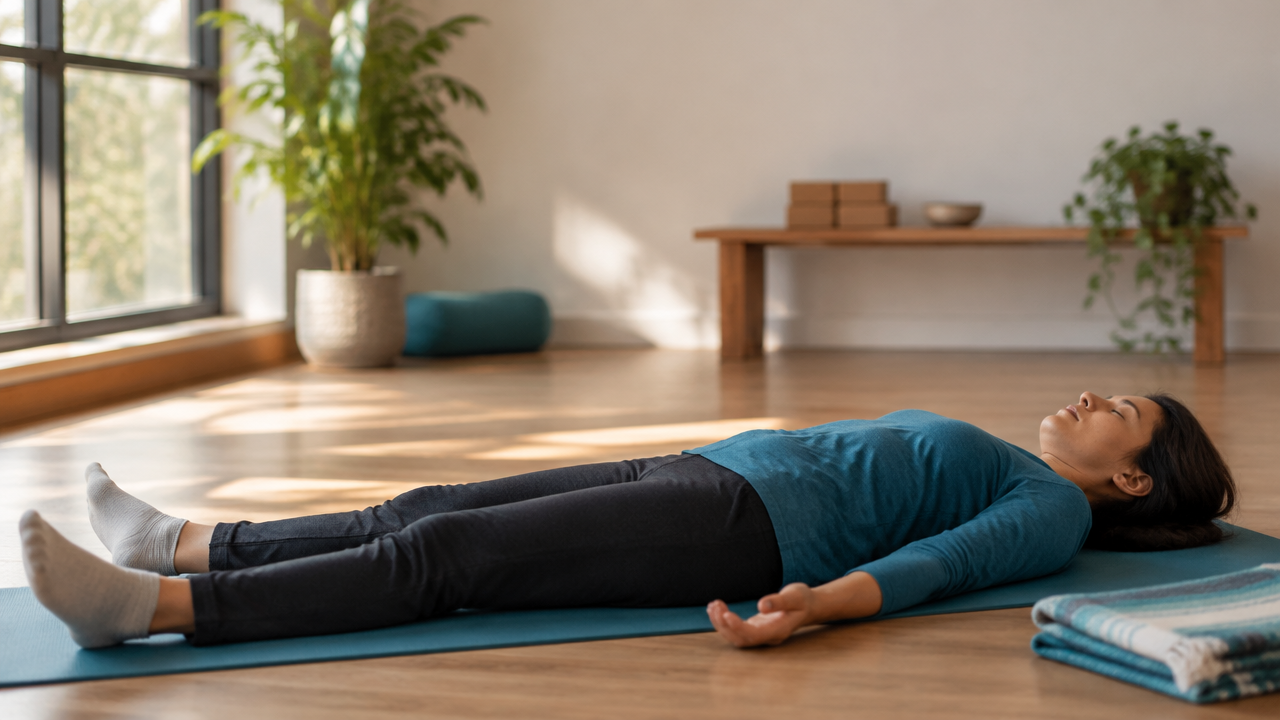
- Body scan: Move attention through different areas of the body and notice sensations, including neutral or unclear ones.
- Seated meditation: Attend to the breath, body, sounds, or thoughts, returning attention when it drifts.
- Gentle movement: Explore simple stretches or mindful movement within a comfortable range.
- Everyday awareness: Practice noticing an ordinary activity, such as eating or walking, as it happens.
These exercises may feel unfamiliar at first. If focusing on the breath feels uncomfortable, ask whether you can use sounds, contact with a chair, or another neutral anchor instead. You can also explore how mindfulness differs from meditation more broadly, since the terms are related but not interchangeable.
What can the course help with, and what can it not promise?
MBSR may help some people build skills for meeting stress, anxiety, or pain, but results vary and the evidence is not equally strong for every condition. It is more useful to view the course as structured skills training than as a promise that difficult feelings or symptoms will disappear.
For chronic low-back pain, the National Center for Complementary and Integrative Health describes evidence of a small improvement associated with MBSR. That finding does not mean every participant will feel better, or that the program addresses the cause of pain. Read the agency’s summary of chronic pain approaches and discuss care choices with your clinician.
A realistic measure of progress might be noticing tension earlier, recognizing a stress reaction, or choosing a more deliberate response in one recurring situation. These outcomes are different from being calm all the time. You can also use mindful approaches to chronic pain as a starting point for questions to bring to your care team.
Who may benefit, and when should you adapt the practice?
MBSR may appeal to people who want structured practice, an instructor, and a group setting for learning. It may be less suitable if the schedule or daily practice feels unmanageable, or if the exercises intensify distress. You can ask about online options, movement modifications, and the instructor’s experience before joining.
Meditation is not risk-free for everyone. The NCCIH notes that some people report negative experiences, including anxiety or depression, and recommends not using meditation to delay conventional care. If focusing inward feels unsettling, pause, open your eyes, move gently, or bring attention to the room. An instructor should support adaptation rather than pressure you to continue.
People living with ongoing pain may need comfortable alternatives to standard postures. Ask in advance whether movements can be modified or skipped, and consult a healthcare professional if you are unsure what is appropriate. A gentle body-scan practice can help you learn what an exercise involves, but it should not replace individualized guidance.
How can you prepare for your first session?
Preparation is mostly practical. You do not need meditation experience, special clothing, or an ability to sit still for long periods. A few questions before enrolling can make the course feel more predictable and accessible.
- Confirm the schedule, attendance expectations, home-practice time, and any retreat day.
- Ask whether the course is instructor-led, self-paced, in person, or online.
- Share relevant accessibility needs or movement limitations with the instructor privately.
- Choose comfortable clothing and arrive with permission to adjust your posture.
- Set a modest intention, such as noticing one stress response, rather than demanding a particular result.
During practice, wandering attention is normal. Each time you notice it and return, you are practicing the skill, not failing the exercise. If you are comparing a course with solo practice, consider whether group guidance or independent meditation better suits your needs.
Frequently asked questions
What are some effective tools for managing stress?
Useful stress tools can include a structured mindfulness course, brief breathing pauses, gentle movement, adequate rest, and support from a qualified professional. MBSR offers guided practice and a way to notice reactions before responding. The best fit depends on your circumstances, and a course is not a substitute for medical or mental health care when needed.
What relaxation techniques can help with anxiety?
Relaxation options include slow breathing, a body scan, gentle movement, and mindfulness meditation. In MBSR, these practices help you notice present-moment sensations and thoughts without immediately reacting to them. If a technique increases distress, stop or adapt it, and ask a qualified instructor or health professional for guidance.
Is MBSR appropriate if I have chronic pain?
MBSR may be an option to discuss with your healthcare professional if you live with chronic pain. It teaches ways to observe sensations and respond to stress, but it does not promise pain relief or replace medical treatment. Ask the instructor about comfortable movement alternatives and ways to adapt seated or lying-down practice.
What should I do if mindfulness practice makes me feel worse?
Pause the exercise, open your eyes, change posture, or shift attention to something neutral in the room. You do not have to push through distress to complete a practice. Tell the instructor what happened and consider discussing persistent or intense reactions with a qualified healthcare or mental health professional.
Can I do MBSR online or at home?
Some instructors offer online classes or guided home practice, but formats and levels of interaction vary. Before enrolling, check whether the course includes live instruction, feedback, group discussion, and adaptations for movement. A guided program can provide structure, while a self-paced option may require more independent planning.