


We can usually sense when one person is worn down. Their voice changes. Their patience gets thin. Their body looks tired before they say a word. Collective burnout is harder to catch, because it spreads across a group and starts to feel normal.
We see it in families, teams, classrooms, care circles, and whole communities. People still show up, but with less warmth. Conversations grow flat. Small problems create large reactions. Rest stops working. Everyone feels a bit off, yet no one has the space to name it.
Collective burnout happens when prolonged stress drains the emotional field of a group, not just the energy of one person.
This matters now more than ever. According to global employee-wellbeing indicators, 27% of U.S. employees reported feeling burned out very often or always, while 40% of workers worldwide experienced heavy stress for much of the previous day. Worry, sadness, anger, and loneliness were also high. When these states gather across many people at once, they shape the tone of the whole environment.
We have noticed this in ordinary moments. A meeting begins, and no one wants to turn on the camera. A family dinner feels tense even in silence. A community group that once felt alive now moves with duty instead of care. Nothing dramatic. Still, something has changed.
Burnout can become a shared climate.
How collective burnout shows up
Collective burnout rarely starts with collapse. It starts with accumulation. Too many demands. Too little recovery. Too much uncertainty. Over time, a group stops processing stress and begins carrying it together.
We tend to spot a few repeating signs:
People react faster and listen less.
Minor issues trigger outsized frustration.
There is more withdrawal, numbness, or silence.
Attendance stays steady, but real presence drops.
Care tasks feel mechanical rather than human.
Trust weakens, and people assume bad intent.
These signs do not always look dramatic. Sometimes the loudest signal is emotional flatness. People stop asking deeper questions. They avoid eye contact. They say, “I am fine,” in a way that closes the door.
A burned out group often looks functional on the surface and disconnected underneath.
That is why we should not wait for crisis before we respond. If we only act when conflict explodes or people break down, we have already missed many gentler chances to care.
Why groups miss the signs
One reason is adaptation. Human beings can get used to strain very quickly. What first felt heavy starts to feel normal. Another reason is shame. People may believe that naming exhaustion means weakness, ingratitude, or failure.
We also live in cultures that reward constant output and emotional suppression. In that setting, a tired group may keep pushing long after its inner balance is gone. The result is a kind of shared self-abandonment.
We once saw this in a volunteer circle after months of intense service. Everyone was kind. Everyone cared. Yet meetings became brittle. No one wanted to admit they were depleted because the mission still mattered. The turning point came when one person simply said, “I think we are all tired in the same way.” The room softened at once.
That is often how healing begins. Not with a perfect plan. With honest naming.

How meditative care helps
Meditative care is not an escape from group stress. It is a way of meeting it without adding more force. When a group is overloaded, what is often missing is not advice but regulation. People need help slowing the nervous system, widening attention, and returning to contact with themselves and each other.
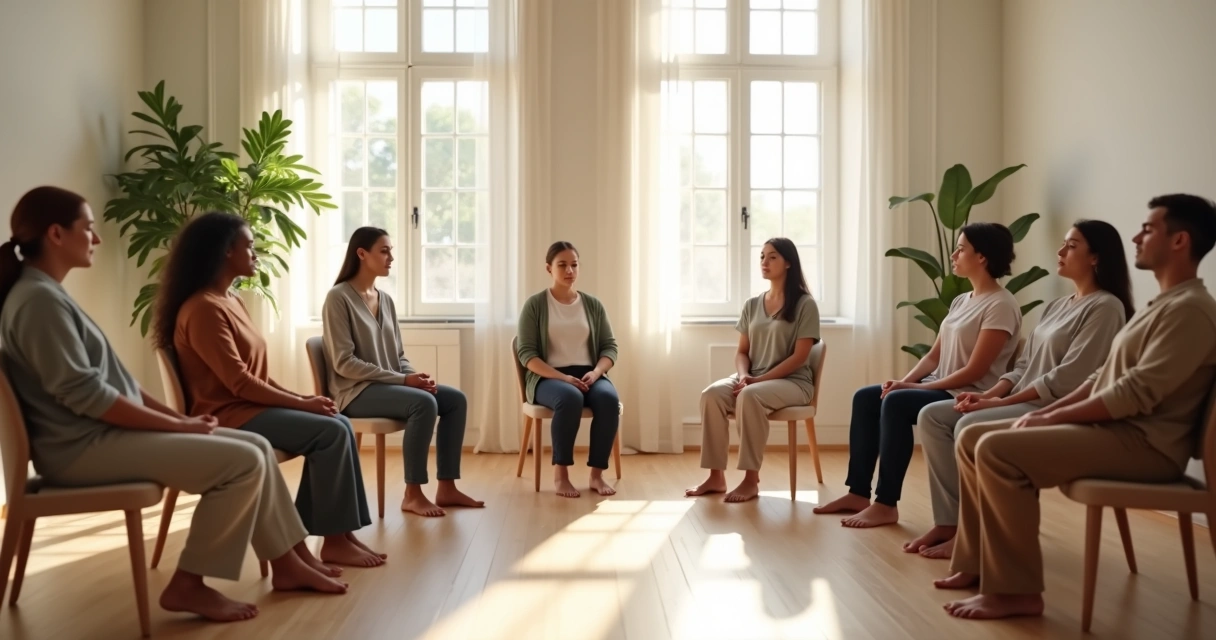
We think of meditative care as a shared practice of presence. It can happen in a workplace, at home, in a school, or before a difficult conversation. It does not need special language. It does need sincerity.
Here is what meditative care can offer a burned out group:
A pause before reaction hardens into conflict.
A calmer body, which supports clearer thought.
More awareness of hidden tension and emotional overload.
A kinder pace for speech, listening, and decision making.
Renewed contact with shared values and limits.
Meditative care helps a group shift from automatic strain to conscious response.
This does not mean everyone must meditate for long periods. In our experience, short and steady practices often work better for tired groups than long and demanding ones.
Simple ways to respond together
When burnout is collective, the response should not fall on one exhausted person. Care needs to become visible, shared, and repeatable. We recommend beginning with small forms that lower pressure rather than add another task.
A gentle sequence can help:
Pause the pace for two or three minutes at the start of a gathering.
Invite everyone to notice breath, posture, and inner state without having to explain it.
Name the shared condition with simple honesty.
Ask what the group can reduce, postpone, or soften this week.
End with one sentence of intention, such as “We will move with more care today.”
We have found that the most helpful practices are often the least dramatic:
One minute of silent breathing before discussion.
A brief body scan while seated.
A check-in round with one word per person.
A shared agreement to slow the speed of replies.
Moments of silence after difficult topics.
These acts may look small. Still, they change the field. They tell people, without performance, that inner life matters here.
Care changes the pace.
What meditative leadership looks like
Every group has people who set the emotional tone, whether they mean to or not. In times of collective burnout, meditative leadership matters. We do not mean a perfect calm voice or spiritual image. We mean the ability to stay present, honest, and regulated enough to not spread more panic.
This kind of leadership often includes three choices:
Naming strain without blaming people.
Making room for pauses, limits, and repair.
Modeling grounded attention in speech and action.
We respect leaders who can say, “We are carrying a lot right now. Let us slow down and respond well.” That kind of sentence can lower collective tension more than a long speech.
It is also wise to know the limit of meditative care. Some groups are carrying trauma, severe conflict, or mental health distress that needs trained support. Meditation can steady the ground, but it does not replace therapy, clinical care, or crisis help when those are needed.
Conclusion
Collective burnout is not just many private struggles happening side by side. It is a shared state that shapes mood, trust, patience, and belonging. If we learn to notice the early signs, we can respond before exhaustion becomes the culture.
We believe meditative care offers a humane answer. It helps groups pause, feel, and reconnect without force. A breath. A moment of silence. A truthful check-in. These are not grand gestures. They are quiet forms of repair.
When a group learns to rest its nervous system together, it becomes more capable of meeting life with dignity and care.
Frequently asked questions
What is collective burnout?
Collective burnout is a shared state of exhaustion that affects a group, not only one person. It grows when ongoing stress, pressure, and emotional overload affect many people at the same time. The result can include irritability, numbness, low trust, and reduced emotional presence across the group.
How do I recognize collective burnout signs?
We can recognize it through patterns such as shorter tempers, less patience, more silence, emotional flatness, weak engagement, and stronger reactions to small problems. A group may still function, but the human quality of connection starts to fade.
How can meditation help collective burnout?
Meditation helps by calming the nervous system, slowing reactivity, and making space for awareness. In a group setting, short meditative pauses can reduce tension, support better listening, and help people respond with more clarity and care.
What are simple meditative care practices?
Simple practices include one minute of quiet breathing, a short seated body scan, a one-word emotional check-in, silent pauses before hard conversations, and speaking more slowly during tense moments. These practices are gentle and easy to repeat in daily group life.
When should I seek professional help?
Professional help should be sought when burnout includes severe anxiety, depression, panic, trauma responses, hopelessness, or conflict that feels unsafe or unmanageable. If daily functioning is breaking down, or if a person or group feels stuck in distress, trained support is the right next step.